
Through the Ice
Contributed by Debra McGhan
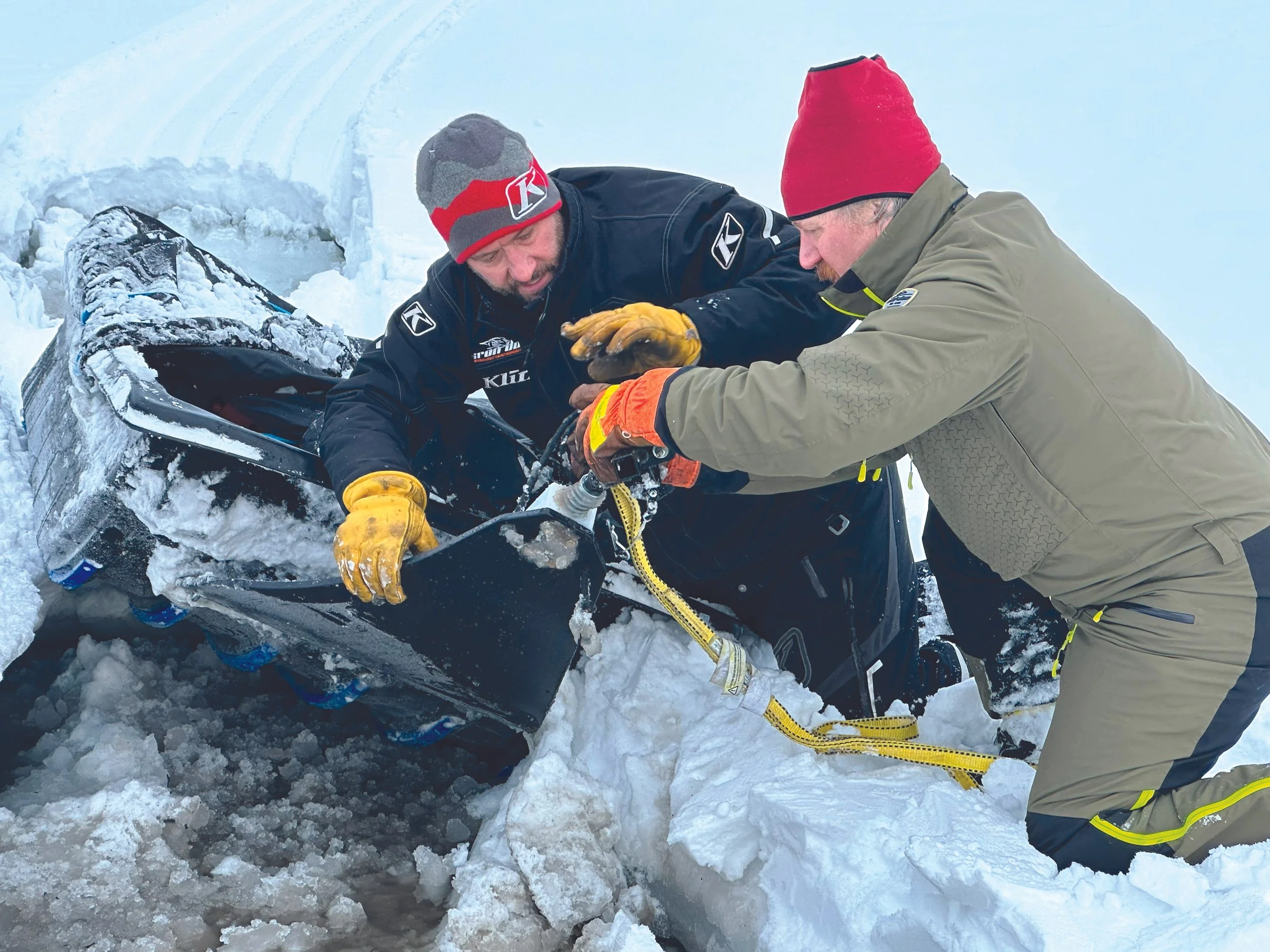
Racing across the frozen Kuskokwim River with his friend, 15-year-old Cole Gilila, didn’t see the hole in the ice until it was too late. He drove into the water and the snowmachine was quickly sucked under the ice, driver and all. His friend managed to escape and went for help, but that also came too late.
According to the State of Alaska and the Center for Disease Control (CDC), Alaska consistently has the highest drowning rate per capita in the nation. Drownings related to falling through the ice, known as FTI, are a well-known risk in Alaska. These tragedies often involve snowmachines or all-terrain vehicles (ATVs) breaking through the ice.
In March 2025, Sean Kendall and Skye Rench met a similar fate to Gilila when their ATV broke through ice on the Susitna River in the Mat-Su Valley. Neither man made it out alive.
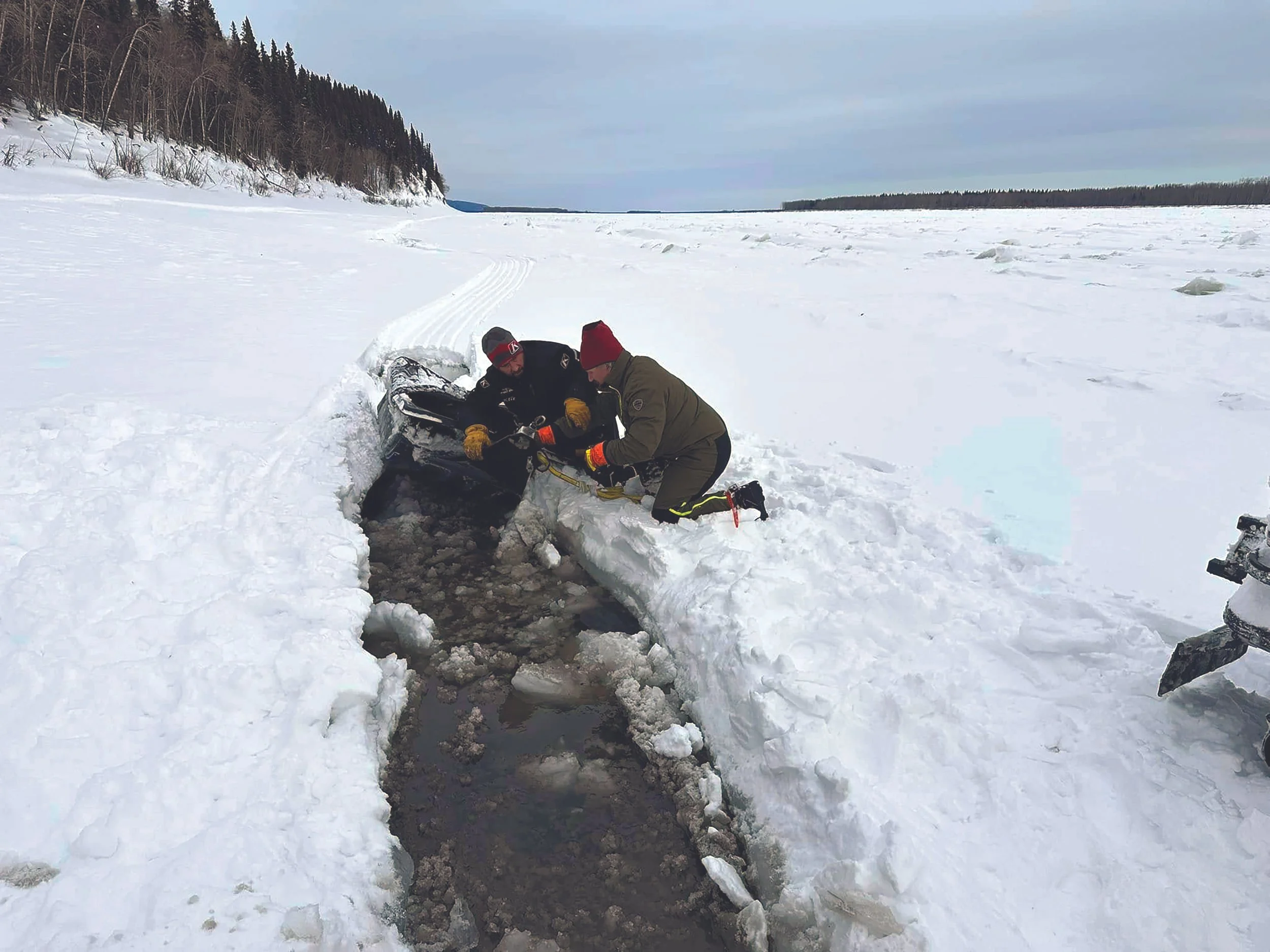
“These types of accidents are far too common,” said Mike Buck, Executive Director of Alaska Safe Riders. “That’s why we include a lot about water safety in our training programs. There are some simple rules to avoid getting caught, and some critical skills and tools you’ll need if you want to have a fighting chance to survive a full immersion.”
A report from the Alaska Department of Health shows there were 342 drownings in Alaska between 2016 and 2021. Of those, 114 occurred in a river or creek, 36 were in lakes and sloughs. There were 62 drownings between December and February that primarily involved snowmachines and motor vehicles breaking through the ice.
“One of the things we really emphasize in our backcountry safety training programs is to never drive a machine faster than you can see,” said Mike. “Many of us have been caught in that very situation where we didn’t see the hazard until we were right on it.”
At least two of Alaska Safe Riders board members, Chris Olds and Tyler Aklestad, have had firsthand experiences of going through the ice and facing death.
“My partner and I were racing along the coast one year, and the ice we were riding on suddenly turned into black ocean water, said Tyler Aklestad. “I headed for the shore and thought I’d be able to just drive up onto solid ice again but there was a steep bank and instead, I slammed right into it.
What followed became hours of life-threatening challenges as Aklestad and his partner fought to escape the freezing ocean waters. Only the fact that they were completely prepared for a range of potential hazards, would enable them to get out alive and successfully extract the sled from the death-grip of the ocean.
“When you are riding in Alaska, it’s critical you have the strength, the right skills, and the appropriate tools if you want a chance of surviving an unexpected hazard,” said Buck. “I’ll never forget speaking in a school in Western Alaska when one of the elders shared a story about falling through the ice.
“He said a spark plug he had shoved in his pocket earlier that day saved his life,” Buck recalled. “Using the sharp end of the plug, he stabbed it into the ice and pulled himself out of the water and back onto a solid surface. He was insistent that if you’re going to be on or crossing any type of frozen water, you better carry some type of device you can use to stab into ice.”
Buck is quick to add that getting out of the water is only the first step in survival. You also need to be prepared to build a fire, get into dry clothes, and seek shelter as quickly as possible.
“There are lots of ways to have a safe, epic riding adventure if you first get prepared,” said Buck. “At Alaska Safe Riders, we offer a host of training opportunities that range from school presentations to multi-day riding courses. We custom design our courses to help you learn right where you are. Whether you’re a beginner or a long-time veteran wanting to take it to the next level, we can build a course for you. We cover a wide range of topics from preparation, avalanches, glaciers to river, lake crossings and much more.”
Wherever you plan to ride, Alaska Safe Riders has a class to help you prepare for a safe, round-trip adventure. Learn more at alaskasaferiders.org today.